
Commercial Invoice
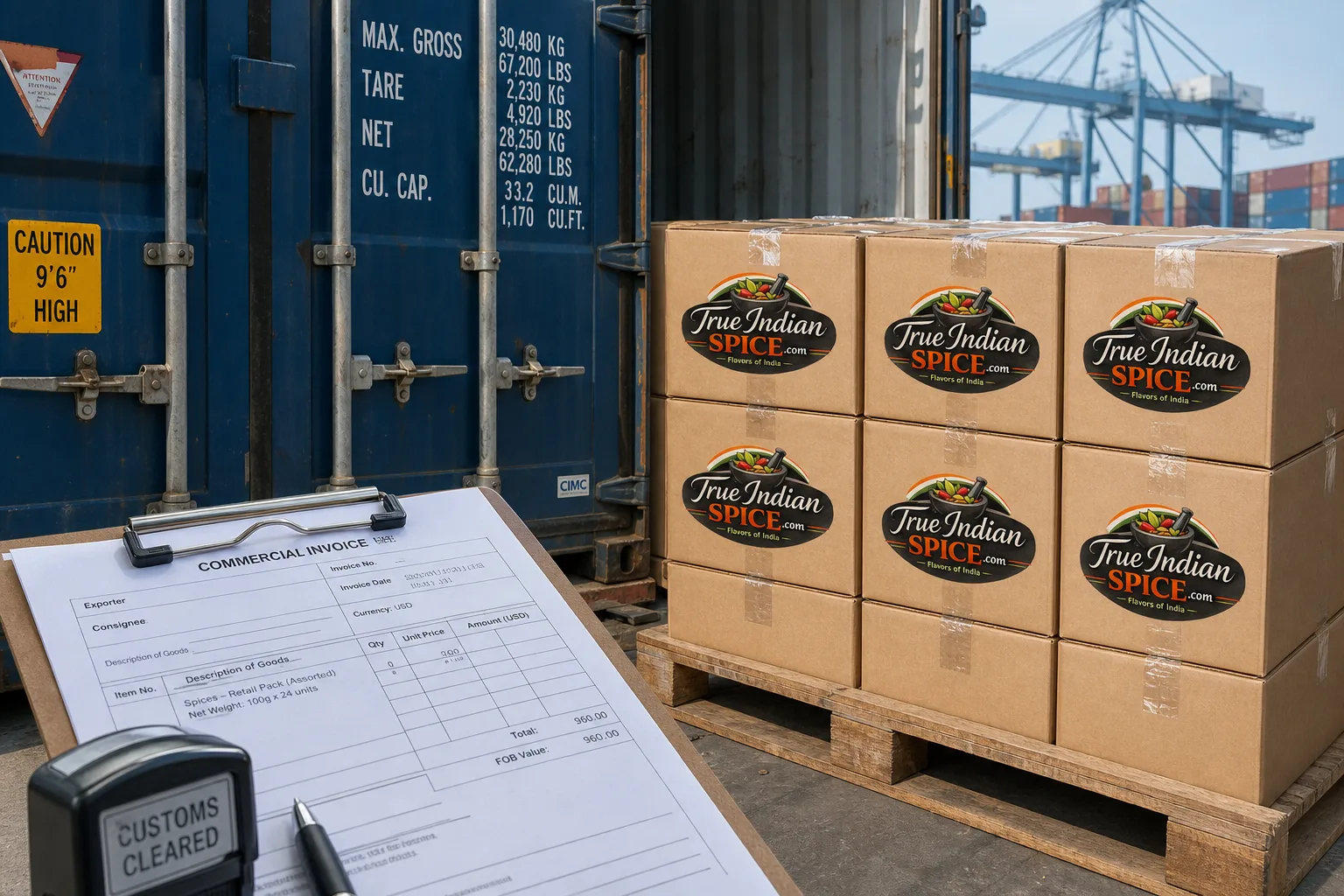
Purpose: Records the commercial sale. When used: Standard for export shipments — seller, buyer, product, quantity, value and terms.
SPICE EXPORT DOCUMENTATION INDIA
True Indian Spice coordinates Indian spice export documentation with international buyers and logistics partners — from commercial invoices and packing lists to certificates and shipping papers — aligned with product, quality and freight planning for smooth international spice shipments.
DOCUMENTATION OVERVIEW
International spice trade depends on documentation that is accurate, consistent and aligned with the physical shipment. Indian Spice Export Documentation supports customs processing, banking, freight coordination and buyer receiving. True Indian Spice plans paperwork alongside product specifications, quality verification and packing so export documents for spices reflect what is actually shipped.
Document requirements can vary by product, destination, shipment type and buyer requirement. Product-specific documents — such as a Certificate of Analysis for spices — may be requested for certain grades or destinations. Destination-specific documentation is confirmed during order and shipment planning. Our approach to Bulk Spice Export Documentation is practical: identify what is needed, prepare it correctly, and share it at the right stage of the export process.
The following export documents for spices are commonly used. Not every document applies to every shipment.
Purpose: Records the commercial sale. When used: Standard for export shipments — seller, buyer, product, quantity, value and terms.
Purpose: Describes physical cargo. When used: Lists packages, weights, marks and packing configuration.
Purpose: Identifies country of origin. When used: Where required by destination customs or buyer files.
Purpose: Summarises quality parameters. When used: Where agreed for batch-related test results.
Purpose: Ocean transport document. When used: Sea freight — cargo, ports and freight settlement.
Purpose: Plant health clearance. When used: Where required for applicable products and destinations.
Purpose: Documents treatment. When used: Where destination or contract requires proof of fumigation.
Purpose: Confirms cargo cover. When used: Where insurance is included under the agreed Incoterm or requested separately by the buyer.
Purpose: Freight records. When used: Air waybill and transport references where applicable.
COMMERCIAL INVOICE
The commercial invoice is the primary financial and customs reference for an international spice shipment. It typically includes seller and buyer identification, product description, quantity, unit price, total value, Incoterm, payment terms reference and shipment information. Consignee and notify-party details are aligned to the buyer's instructions.
True Indian Spice prepares commercial invoices consistent with the confirmed order and physical packing — supporting export compliance for spices without overstating what any single shipment requires.

PACKING LIST
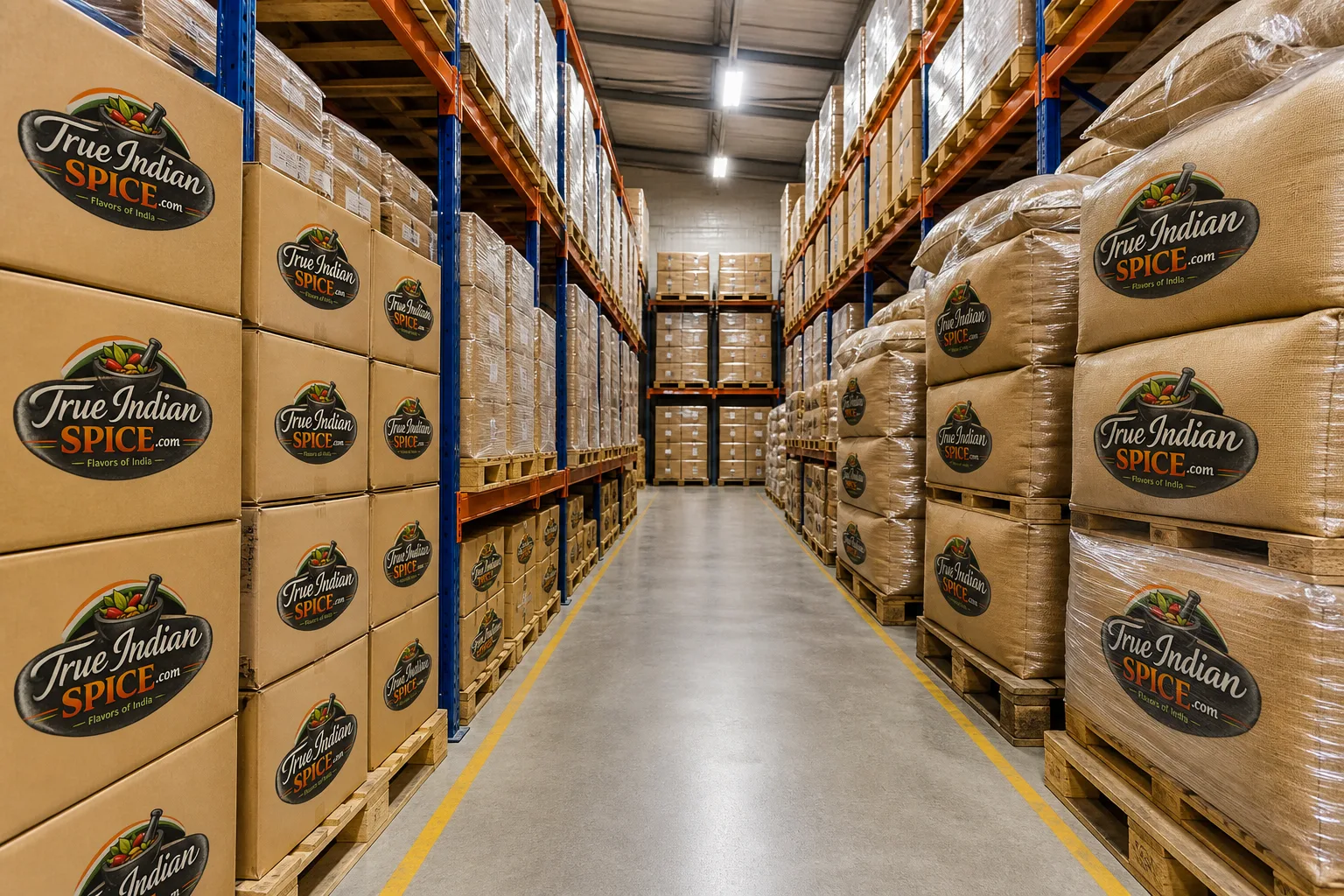
The packing list describes product and package details, number of packages, net weight, gross weight, packing configuration and shipping marks. It supports warehouse receiving and customs inspection where applicable.
Data is drawn from actual packing execution and coordinated with our packaging team so figures match the loaded cargo.
CERTIFICATE OF ORIGIN
A Certificate of Origin for spices identifies the country where goods were produced. It is used where required by destination customs or buyer compliance documentation. True Indian Spice can arrange COO support where applicable — scope is confirmed during order planning.
CERTIFICATE OF ANALYSIS
A Certificate of Analysis for spices may summarise relevant quality and testing parameters where provided. Typical COA content can include product identification, quality parameters, batch reference, test results and specification comparison. Results relate to the specific lot shipped — we do not invent laboratory values.
COA preparation is linked to our quality control process before release.
May be required for applicable plant-origin products and destinations, where plant-health authorities request formal clearance. Requirements vary and are confirmed during shipment planning.
Documents specified treatment where contractually or destination-required. Not all shipments require fumigation — details are recorded when applicable.
We use clear language — where applicable, where required — so importers understand documentation scope. Discuss specific needs via our contact page.
SHIPPING DOCUMENTS
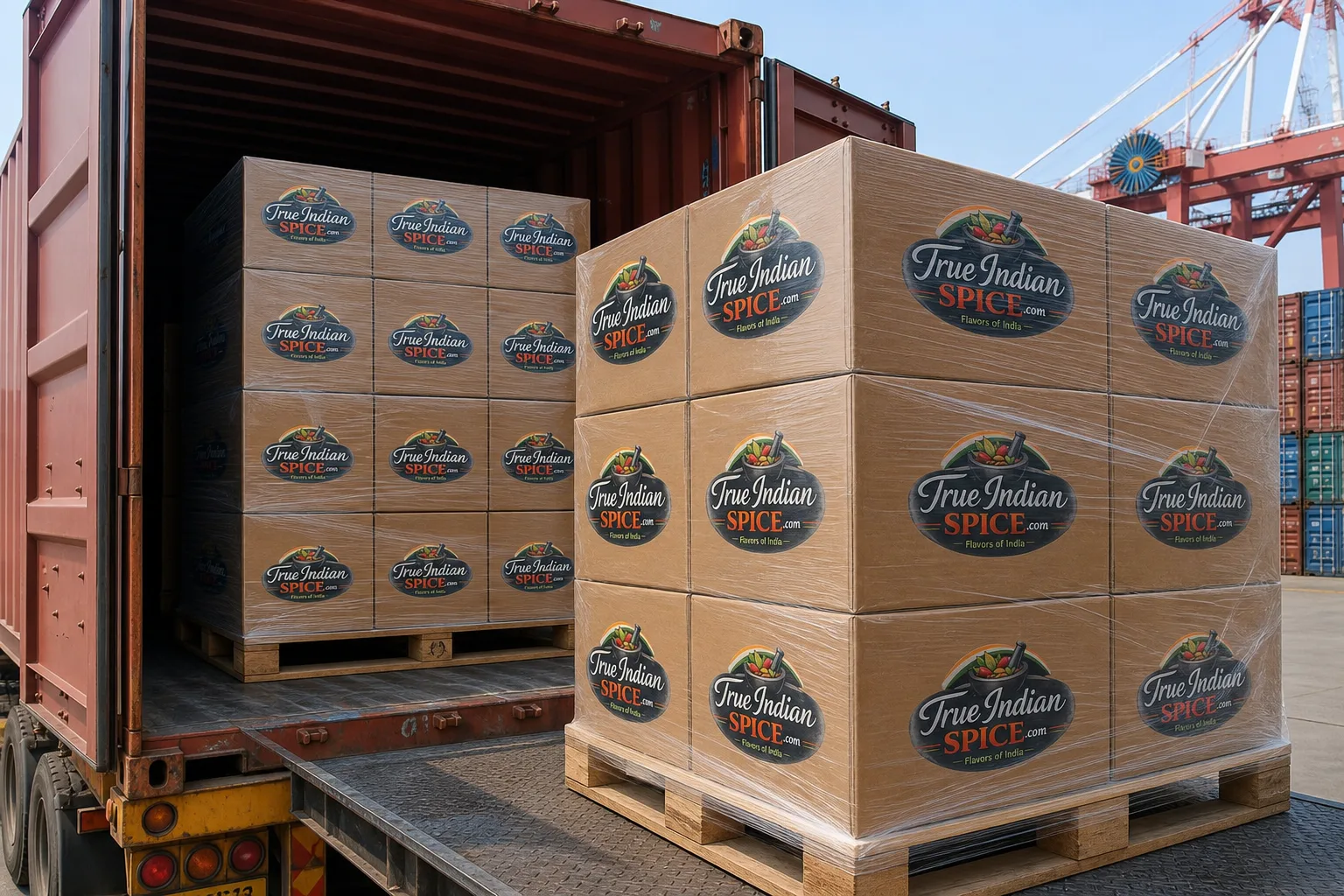
Shipping documents connect the commercial shipment to freight execution. For ocean freight, the Bill of Lading records carrier, ports, container references and cargo description. Air freight may use an Air Waybill where applicable.
True Indian Spice coordinates spice shipping documents with freight partners. For shipment modes and Incoterms, see shipping and logistics within our export process.
Documentation is planned across the order cycle. This workflow complements the full spice export process.
Document list, destination needs and buyer compliance instructions captured at enquiry.
Specs, quantity, Incoterm and commercial terms locked for documentation planning.
Quality parameters and certificate scope aligned to the agreed product and destination.
Required invoices, certificates and shipping papers identified before production.
Lots processed with batch identity preserved for COA and packing list accuracy.
Inspection and testing where agreed — records feed certificate preparation.
Counts, weights, labels and marks finalized for packing list and invoice data.
Commercial and supporting certificates drafted against actual packed cargo.
Freight booking, container or air references linked to transport documents.
Copies sent to buyer, bank and broker channels as agreed before and after sailing.
Final transport documents issued; shipment records retained for buyer support.
Documentation adapts to shipment mode — subject to product and destination requirements.
Typically requires bill of lading, packing lists and commercial invoices aligned to container stuffing. Phytosanitary or fumigation certificates may apply where required.
May use air waybill documentation where applicable. COA and commercial invoices remain important with certificate timing planned against flight schedules.
Requires careful marking and packing-list clarity so consolidated cargo is identifiable at destination deconsolidation.
Links invoice, packing list and bill of lading to a single container reference and seal number.
May use simplified paperwork depending on value, courier channel and destination. Share sample needs early.
DOCUMENTATION & QUALITY
Quality and documentation are linked: Product Batch → Quality Check → COA → Packing Information → Commercial Invoice → Shipment Documents. Lots cleared through quality control provide data for certificates. Our certifications reflect company standards; shipment COA addresses the specific batch dispatched.
DOCUMENTATION & PACKAGING
Packaging information supports the packing list, shipping marks, carton details, net and gross weights and label information on commercial documents.
For materials and private-label options, visit Packaging Solutions. Here, the focus is how packing execution enables accurate international spice documentation.
DOCUMENTATION & LOGISTICS
Documentation supports freight coordination, customs processing, shipping execution and buyer communication. Our export desk aligns document release with booking milestones and sailing schedules.
For transportation coordination, see Shipping & Logistics. Explore countries we export for market-specific planning discussions.
Documentation can vary by destination country, product, product form, buyer requirement, shipping method and applicable authorities. We do not publish unsupported country-specific legal requirements here. Destination documentation is confirmed during order and shipment planning with reference to buyer instructions and our infrastructure and export teams.

WHY BUYERS TRUST OUR DOCUMENTATION SUPPORT
B2B spice importers need organized Indian Spice Export Documentation coordinated with product, quality, packaging and logistics — not paperwork prepared as an afterthought.
Invoices, lists and certificates prepared with consistent product and shipment data.
Documents released in step with freight booking and dispatch milestones.
Descriptions and specifications aligned to the actual shipped grade and pack format.
COA and inspection data connected to released lots where agreed.
Practical guidance on document scope without unsupported compliance claims.
Responsive export desk for document questions before and after shipment.
Depending on the order, documentation may include commercial invoice, packing list, certificate of origin, certificate of analysis where agreed, phytosanitary or fumigation certificates where required, bill of lading or air waybill, and insurance documents where applicable. Requirements are confirmed during order planning.
Yes. A Certificate of Origin can be arranged where required by the buyer or destination customs authorities. Scope is confirmed during quotation and order confirmation.
A Certificate of Analysis can be provided where agreed, summarising relevant quality and testing parameters for the shipped batch. Specific parameters are aligned to buyer requirements and product specifications.
Phytosanitary documentation may be required for certain plant-origin products and destinations, subject to applicable authorities. Requirements vary by product, form and destination and are confirmed during shipment planning.
No. Spice export documentation depends on product, destination, shipment type, buyer requirements and applicable regulations. Each order is planned individually.
Yes. Buyers can discuss documentation requirements during enquiry and order confirmation. Draft or advance copies may be shared where commercially practical before dispatch.
Yes. We coordinate shipping documents such as bill of lading, air waybill where applicable, and related transport references with freight partners as part of export shipment coordination.
Contact our export team with product, destination, shipment type and any buyer-specific document list. We will review requirements and confirm what can be supported for your order.
Contact our export team to discuss documentation requirements for your product, destination and shipment.
 Minimum Orderas per requirement
 Flexible PaymentTerms
 Secure Packagingfor Export
 On-time ShipmentEvery Time
 Complete DocumentationSupport