Incoming Discipline
Supplier selection, visual checks, aroma and colour assessment, moisture screening, and sampling set the foundation before processing begins. Weak lots are rejected or reworked early — not discovered at packing.

QUALITY CONTROL
Every batch undergoes rigorous quality inspection, laboratory testing, hygienic processing, and export-quality packaging before dispatch — delivering Quality Tested Indian Spices for importers, distributors, and food manufacturers worldwide.
QUALITY PHILOSOPHY
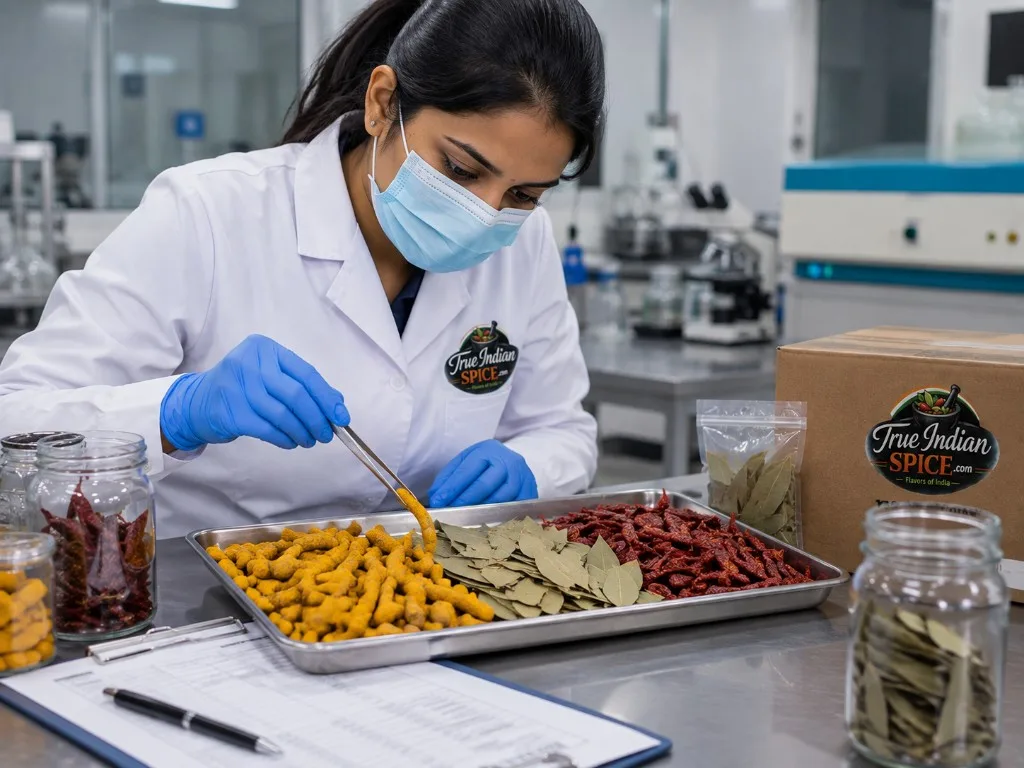
At True Indian Spice, Spice Quality Control Export is not a final checkpoint — it is a continuous operating discipline. As a Quality Assurance Spice Exporter, we treat every lot as a commercial commitment to purity, moisture stability, appearance, aroma integrity, and documentation readiness. Our philosophy is simple: only material that meets agreed export standards advances to packing and dispatch.
International buyers depend on Laboratory Tested Spices and process transparency. That is why our Food Safety Spice Export approach combines supplier accountability, hygienic handling, inspection at each stage, and clear communication when specifications, sampling plans, or destination requirements change.
Our Export Quality Control India framework covers raw material intake through final container loading. Each stage exists to protect product integrity, reduce commercial risk for importers, and keep Quality Tested Indian Spices consistent across repeat orders.
Supplier selection, visual checks, aroma and colour assessment, moisture screening, and sampling set the foundation before processing begins. Weak lots are rejected or reworked early — not discovered at packing.
Cleaning, sorting, grading, and machine processing remove foreign matter and broken material while preserving the commercial grade buyers expect for food manufacturing and retail repacking.
Where required, laboratory analysis covers moisture, purity, microbiology, foreign matter, colour, heavy metals, and pesticide residue — supporting COA and buyer quality documentation.
Packaging inspection, warehouse standards, FIFO inventory control, and container checks ensure Food Safety Spice Export standards remain intact until the shipment leaves India.
From raw material procurement to final dispatch, every step of our Spice Quality Control Export process is sequenced for consistency, traceability, and international market readiness.
Sourcing from reliable origin partners with grade, moisture, and purity expectations defined upfront.
Visual, colour, aroma, size, purity, moisture, and foreign matter checks before acceptance.
Removal of dust, light impurities, and non-product material through hygienic cleaning systems.
Commercial grading by size, colour, and appearance aligned to buyer specification.
Controlled machine processing to prepare uniform, export-ready spice lots.
Moisture verification against agreed limits to protect shelf life and transit stability.
Metal detection controls applied to reduce metallic contamination risk before packing.
Laboratory Tested Spices for key safety and quality parameters as required by the order.
Export packaging with liner options, labeling discipline, and seal integrity checks.
Dry storage, palletization, FIFO, and pest-control environment checks before loading.
Container cleanliness, odour, moisture, and seal inspection with supervised stuffing.
Documentation closure and shipment release only after quality and packing clearance.
INCOMING RAW MATERIAL INSPECTION
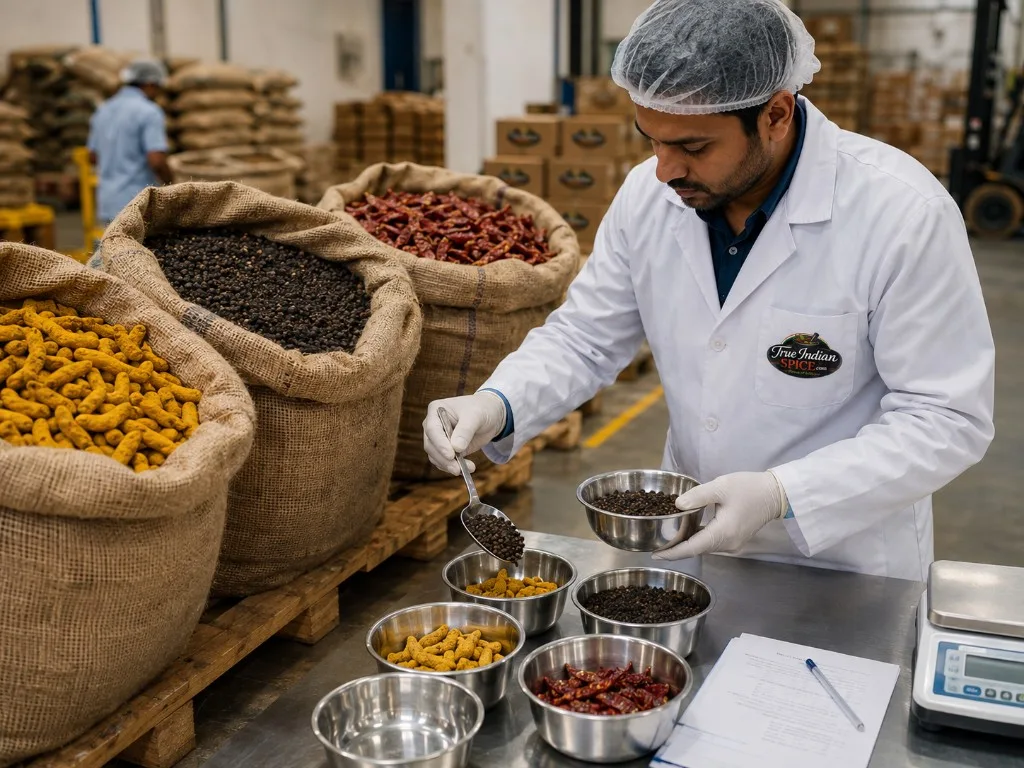
Quality Control begins before spices enter processing. We select suppliers based on origin reliability, previous lot performance, and ability to meet commercial grade expectations. Incoming raw material inspection then validates whether a lot is fit for export programs.
Each accepted lot is evaluated for visual condition, colour uniformity, characteristic aroma, size profile, purity, moisture, and foreign matter. Sampling is used to represent the consignment fairly so that Export Quality Control India decisions are based on evidence, not assumption. Material that fails critical checks is held, reworked, or rejected according to risk and buyer requirements.
Origin partners are aligned to grade, moisture, and purity expectations before purchase.
Colour, aroma, appearance, and size assessed against the intended commercial grade.
Representative sampling supports moisture, purity, and foreign matter decisions at intake.

Cleaning removes dust, light impurities, and loose foreign matter so that Quality Tested Indian Spices enter grading with a cleaner commercial base and reduced contamination risk.

Sorting and grading separate broken material, off-colour pieces, and non-conforming fractions so lots match the size, colour, and appearance profile requested by importers and manufacturers.
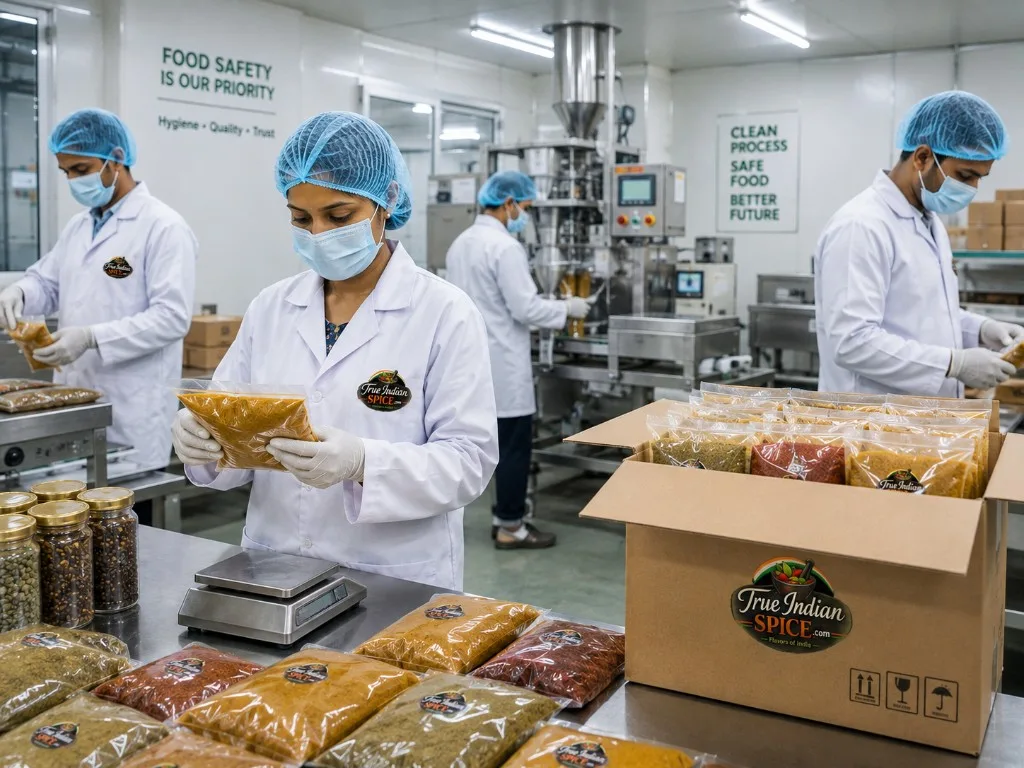
Cleaning and sorting are performed with Food Safety Spice Export discipline — clean contact surfaces, controlled movement, and lot identity preserved throughout handling.
MACHINE PROCESSING
Machine processing supports consistency across bulk lots. Depending on product category — whole spices, leaves, chillies, turmeric, or specialty items — processing may include further cleaning, size separation, controlled handling, and preparation for moisture stabilization and packing.
The goal is commercial uniformity: lots that look, smell, and perform as buyers expect in seasoning plants, private-label packing lines, HORECA supply chains, and ingredient manufacturing. Process settings are adjusted to protect aroma and appearance while meeting Export Quality Control India targets for purity and foreign matter.
Processing reduces variation so repeat orders stay commercially comparable.
Handling is designed to limit breakage and preserve export appearance standards.
Processed material moves forward only when moisture and cleanliness targets are aligned.

LABORATORY ANALYSIS
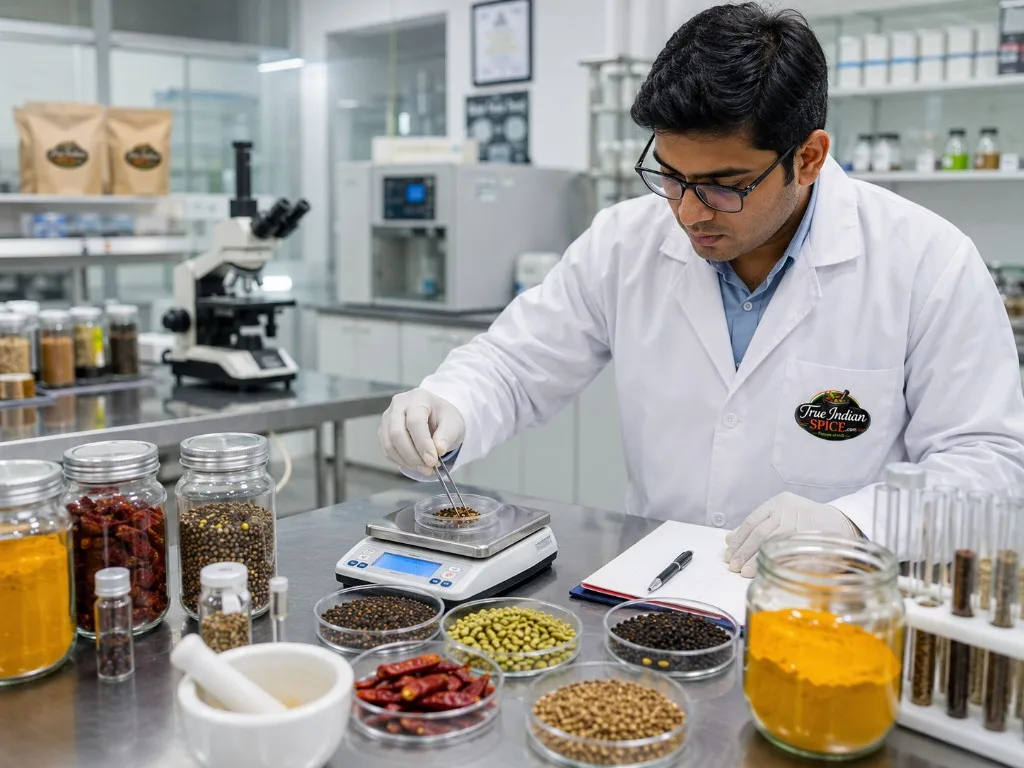
Laboratory support is central to our role as a Quality Assurance Spice Exporter. Where buyer programs or destination markets require it, we arrange testing for moisture, purity, foreign matter, colour, odour confirmation, microbiology, heavy metals, and pesticide residue. Results inform go / hold decisions and support Certificate of Analysis (COA) documentation.
Not every parameter is tested on every lot by default. Scope is defined at RFQ and contract stage so that Spice Quality Control Export effort matches real commercial and regulatory need — efficient for buyers, rigorous where it matters.
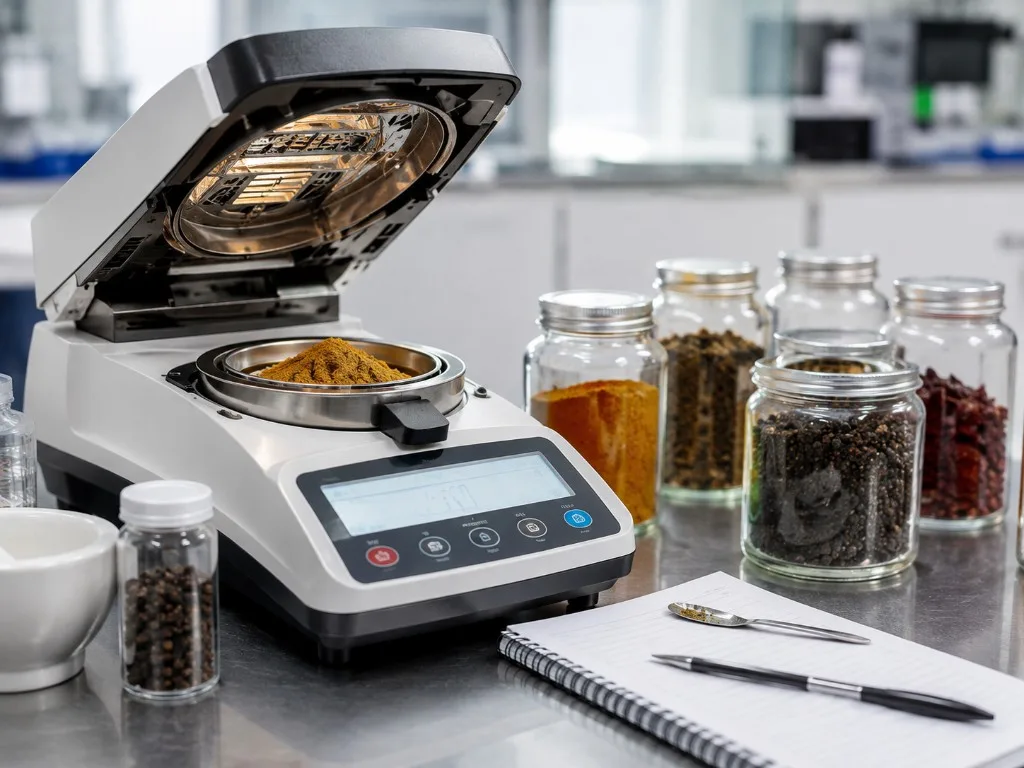
Excess moisture elevates spoilage risk, encourages mould, and can damage aroma and commercial appearance during long sea transit. Moisture control is therefore a non-negotiable part of Food Safety Spice Export programs for almost every destination market.
Moisture is reviewed at incoming inspection and verified again before packing. This dual-stage approach prevents wet lots from entering process and confirms finished lots meet buyer limits before sealing.
Packaging formats and liner options are selected to protect moisture targets through warehouse storage and container transit, supporting shelf-life expectations for Quality Tested Indian Spices.
Agreed moisture maxima are confirmed during RFQ. Lots that cannot meet the approved limit are not released for that export program without buyer discussion and written agreement.
Foreign matter includes dust, stems, stones, plant debris, and other non-product material. Controlling these fractions protects purity claims, grinding yield, and finished-product presentation for importers.
Cleaning, sorting, grading, and visual inspection reduce foreign matter through successive stages. Sampling checks confirm that residual levels remain within commercial tolerance for the grade sold.
Low foreign matter improves buyer acceptance, reduces claims, and supports premium positioning for spice lots destined for retail repacking and food manufacturing.
Foreign matter limits are treated as hard commercial parameters within our Spice Quality Control Export system — not optional finishing details.

METAL DETECTION
Metal detection is integrated into our Food Safety Spice Export process to reduce the risk of metallic contamination. As a Quality Assurance Spice Exporter serving manufacturers and importers, we treat physical hazard control as essential — alongside moisture, purity, and microbiological expectations.
Metal detection is applied as a defined control point before packing where process design requires it.
Supports factory and private-label programs that demand physical contaminant controls.
Reduces shipment risk and strengthens Food Safety Spice Export documentation narratives.
PACKAGING INSPECTION
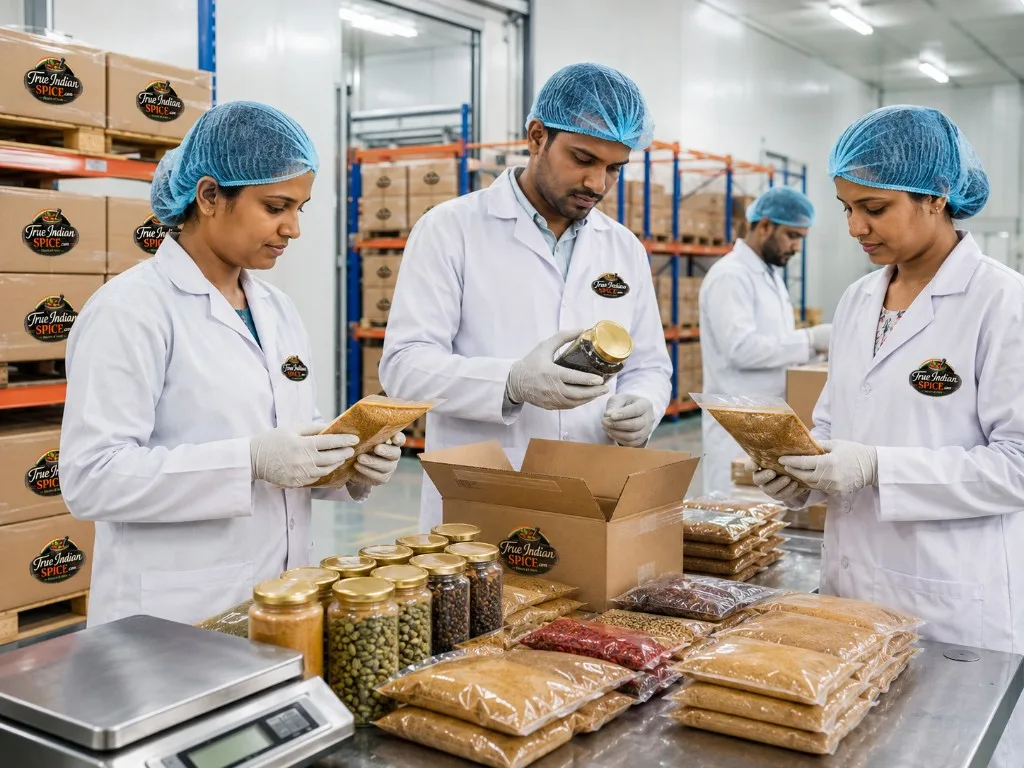
Packaging is the last physical barrier between Quality Tested Indian Spices and long-distance logistics. Before release, we inspect bags, cartons, liners, seals, and labeling for damage, incomplete closure, and identity errors. Packing must protect moisture targets, prevent contamination, and keep lot information readable through warehouse and port handling.
Whether the order is bulk export packing or a custom private-label format, packaging inspection confirms that commercial presentation matches the approved packing list and buyer instructions.

WAREHOUSE STANDARDS
Warehouse standards protect finished lots after packing and before container loading. Temperature and humidity awareness, dry storage conditions, palletization off the floor, FIFO rotation, pest control, and a clean environment are essential to maintain Export Quality Control India outcomes until dispatch.
Lots stored to limit moisture uptake, cross-contamination, and handling damage.
Palletized stacking and first-in-first-out movement support lot freshness and identity.
Clean warehouse environment and pest-control discipline for food-grade spice storage.
Lot tracking supports sampling, re-inspection, and accurate packing-list preparation.

CONTAINER INSPECTION
Even a perfect lot can be compromised by a poor container. Before stuffing, we inspect containers for cleanliness, residual odour, moisture risk, structural fitness, and seal readiness. Loading supervision protects packaging integrity, stacking discipline, and lot segregation through final dispatch.
This stage closes the Spice Quality Control Export loop: product, packing, warehouse, and logistics controls aligned so buyers receive shipments that reflect the quality approved at origin.
Traceability connects farm-level collection to export dispatch so buyers can understand where Quality Tested Indian Spices traveled through our Export Quality Control India system.
Origin production linked to known growing regions and harvest timing.
Aggregation and supplier intake with lot identity established early.
Hygienic cleaning recorded as a controlled process stage.
Grade and size decisions captured against commercial targets.
Test results and COA references linked to the export lot where required.
Packing date, format, and seal checks tied to shipment documents.
Storage location and FIFO movement maintained until loading.
Container number, seal, and loading supervision complete the chain.
Final dispatch with commercial documentation for destination clearance.
Typical commercial parameters used in our Spice Quality Control Export programs. Exact limits are confirmed per product and buyer specification.
| Parameter | Specification / Focus |
|---|---|
| Moisture | Controlled to agreed maximum for product grade and transit stability |
| Purity | High commercial purity targets aligned to export grade |
| Foreign Matter | Minimized through cleaning, sorting, and inspection within agreed limits |
| Broken Material | Controlled by grading and careful machine handling |
| Colour | Natural product colour consistent with approved commercial grade |
| Odour | Characteristic aroma; free from off-odours and contamination smell |
| Appearance | Clean, well-presented lots suitable for wholesale and manufacturing use |
| Shelf Life | Supported by moisture control, packing integrity, and dry storage |
| Packing | Export bags / cartons with liner and seal options as agreed |
| Compliance | Buyer specs, destination requirements, and export documentation support |
FOOD SAFETY STANDARDS
Food safety for spice exports is more than a certificate on the wall. It is how suppliers are selected, how lots are cleaned and stored, how moisture and foreign matter are controlled, how metal detection is applied, and how laboratory testing is scoped for destination risk. True Indian Spice integrates these controls so Laboratory Tested Spices and process hygiene work together.
Buyers in the USA, Europe, Middle East, Asia, and other markets increasingly expect documented Food Safety Spice Export practices. Our approach supports that expectation with practical inspection discipline, hygienic packaging, warehouse pest control, and responsive communication when additional testing or documentation is required.
As a Quality Assurance Spice Exporter, we align commercial grade delivery with safety-minded execution — helping importers and food manufacturers reduce incoming rejection risk and strengthen their own supplier approval files.
Invoice, packing list, and shipment paperwork prepared to match the approved order, packing format, and destination logistics plan for smooth clearance coordination.
COA, quality reports, and test summaries provided as agreed — connecting Laboratory Tested Spices to the commercial lot identity on the packing list.
Origin and compliance-related documentation support is coordinated according to product category and importer destination requirements.
Document scope is confirmed early so Export Quality Control India and paperwork expectations are aligned before production and packing begin.
WHY BUYERS TRUST US
Global buyers return to suppliers who combine consistent grades with transparent Spice Quality Control Export processes. Here is what defines True Indian Spice as a Quality Assurance Spice Exporter.
Every program is built for international commercial standards, not domestic leftovers.
Incoming, process, packaging, warehouse, and container checks before dispatch.
Laboratory Tested Spices and COA support aligned to buyer and market needs.
Food Safety Spice Export practices designed for importers across 25+ countries.
Repeat-order readiness with grade continuity and clear RFQ communication.
Export packing inspected for seal integrity, labeling, and transit protection.
Every export lot follows a defined quality control path covering supplier selection, incoming inspection, cleaning, sorting and grading, moisture checks, foreign matter control, metal detection, laboratory analysis where required, packaging inspection, warehouse checks, and container loading supervision before final dispatch.
Yes. We support buyer-required laboratory testing and can provide Certificate of Analysis (COA) and related quality reports for agreed parameters such as moisture, purity, foreign matter, microbiology, heavy metals, and pesticide residue depending on product and destination market.
Moisture is monitored during incoming inspection and before packing. Lots are processed and packed to agreed moisture targets to protect product stability during sea transit and warehouse storage in destination markets.
Each shipment undergoes inspection and quality verification aligned to the product grade and buyer specification. Laboratory testing scope is confirmed at RFQ stage and applied as agreed for that commercial program.
Yes. Containers are checked for cleanliness, odour, moisture risk, structural fitness, and seal readiness. Loading is supervised to protect packaging integrity and maintain lot identification through dispatch.
Foreign matter is controlled through cleaning, sorting, grading, visual inspection, and sampling checks so that dust, stems, stones, and other non-product material remain within agreed commercial limits.
Metal detection is applied as part of our food safety spice export process to reduce metallic contamination risk before packing and dispatch, supporting buyer and destination market expectations.
Yes. Importers and manufacturers can share target specifications for moisture, purity, size, colour, packaging, and documentation. We align sampling, inspection, and packing to the approved commercial agreement.
Our food safety approach includes hygienic handling, controlled storage, pest management discipline, process inspection, laboratory support where required, and export documentation coordination for destination compliance needs.
Share your product, quantity, destination, packing preference, and required quality parameters by email, WhatsApp, or the quote form. We will respond with commercial details and quality report support options.

Request a quality report for your product program or share an RFQ for moisture, purity, packing, and documentation requirements.
 Minimum Order
as per requirement
Minimum Order
as per requirement
 Flexible Payment
Terms
Flexible Payment
Terms
 Secure Packaging
for Export
Secure Packaging
for Export
 On-time Shipment
Every Time
On-time Shipment
Every Time
 Complete Documentation
Support
Complete Documentation
Support